!["Freedom of Speech" by Norman Rockwell, 1943. [PHOTO COURTESY OF SMITHSONIAN AMERICAN ART MUSEUM]](https://blueandgoldonline.org/wp-content/uploads/2026/05/freedom-of-speech-1200x849.png)
It’s midnight, and you wake to the sound of a knock at your door. Standing on the other side is a police officer, here to arrest you for the crime of posting a ‘politically incorrect’ statement on your personal social media account.
If ‘freedom’ of speech doesn’t ensure freedom after speech, people will engage in self-censorship. So, unless freedom of speech has no legal consequences, it might as well not be free. Of course, threats of violence are, in many countries with free speech, punishable crimes. However, aside from threats of violence, posting a controversial statement has never been a criminal offense. This is changing. The governments of many first-world countries have begun to intervene in speech that no longer qualifies as free.
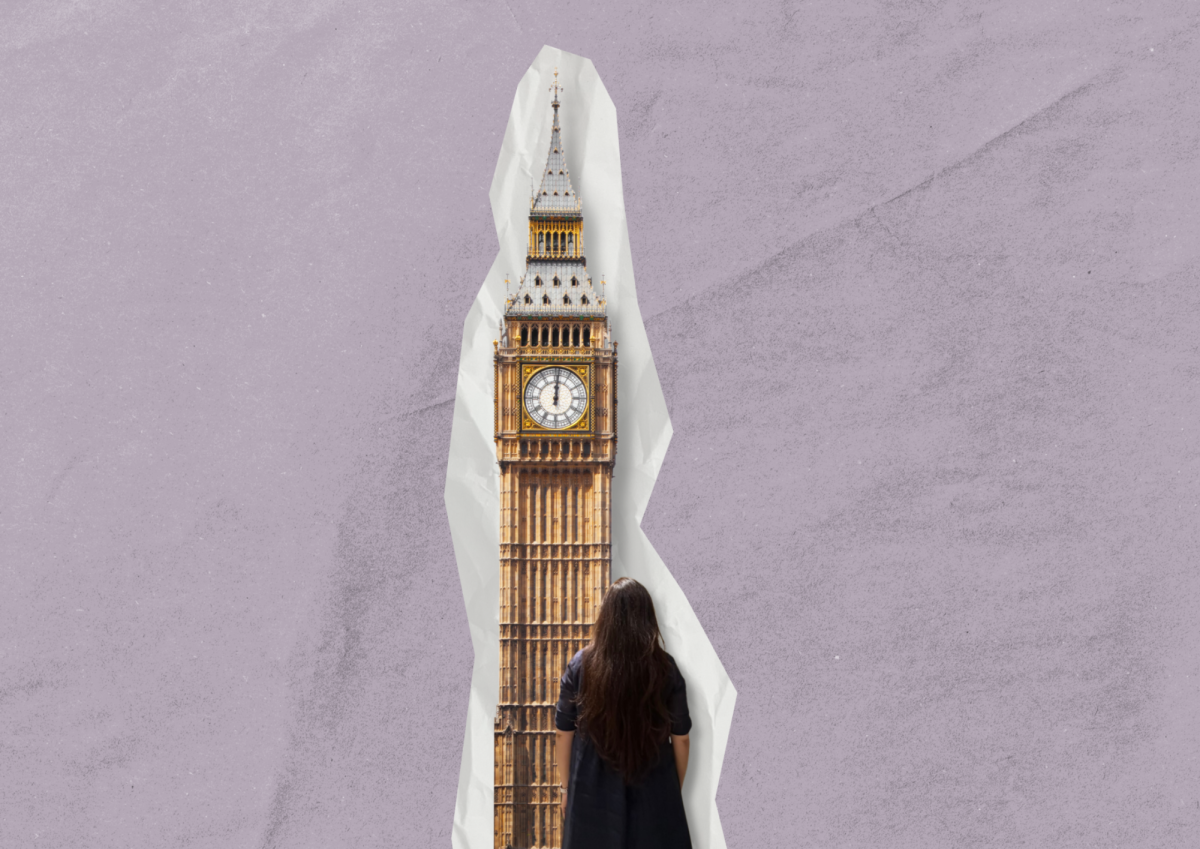
Historically, Western nations have been regarded as epitomes of free speech. That reputation, however, is degrading at a rapid rate. Nowhere in the Western world is free speech experiencing a decline as devastating as in the United Kingdom. In mid-2024, Englishman Pete North was arrested late at night for posting a meme on the social media platform X. The meme bore the text “F*** Palestine F*** Hamas F*** Islam…Want to protest? F** off to a Muslim country & protest” over the image of a Palestinian flag. He was likely trying to stir up a comment-section war. But profanity and controversy aren’t—or shouldn’t be—grounds for arrest. He exercised his right to express his opinion and didn’t incite violence. Still, law enforcement intervened.
Arrests premised on personal viewpoints beg the question: Should governments have the authority to dictate what constitutes the “correct” political stance? Granted, the UK does not grant its citizens a guaranteed right to free speech; its laws state that the government has the authority to censor any speech that is “threatening, abusive or insulting.” But censorship being legal doesn’t mean that it’s right. After all, everything ranging from child mailing to slavery has been legal at some point in history.
It’s not unusual to want to ban opinions you think are immoral. But this perspective is incredibly self-serving. It fails to account for the fact that there are people who don’t understand your views and believe you’re the one who should be censored. Would you still support political censorship if the censorship were directed towards you? Because if you only like censorship when it benefits you, you’ve got a serious case of the “it’s only right if I do it” mentality. No human can always be right. Yet, every individual—regardless of their views—holds a sense of moral superiority and correctness that refuses to be swayed. What kind of world would emerge if every single person tried to assert their own ideologies as the one truth, while pushing for censorship of anyone who contradicts them, even by the slightest degree?
Disagreement is an inescapable part of human society, and in many cases, functions as a tool that advances humanity’s view on ethics and cultures while also contributing to scientific progress. Censoring someone simply because their views are controversial is still censorship. If speech is free, it should be free for everyone—or else it isn’t free at all. A government enacting censorship laws calibrated to one set of political beliefs is a bright red sign with “authoritarianism” painted over it.
The case of Pete North wasn’t a standalone incident. It is merely one entry in a constantly lengthening list of individuals who have faced law enforcement intervention over their personal beliefs. For example, Sameul Melia, who sold political sticker designs, was imprisoned for two years. Each case has its own bundle of justifications—many state that Samuel Melia could have been organizing centralized plots to sabotage immigrants. Still, these justifications do not have sufficient evidential backing—and together, they describe a pattern of unethical censorship.
Unless someone is directly making threats of violence or is obviously implying serious plans to commit violence, they shouldn’t be censored. We should fight for the free speech that each of us deserves, regardless of whether we disagree with one another or not. Only then will we have truly created a culture of freedom and an environment that seeks to address disagreements instead of shoving them into walls that close in on us—hurting not only ourselves but also the countries that we all just want the best for.
![After finishing their application process, seniors are ready to reflect. [PHOTO COURTESY OF CLASS OF 2026]](https://blueandgoldonline.org/wp-content/uploads/2026/05/Copy-of-Copy-of-IMG_6059-1200x675.jpg)
![[PHOTO COURTESY OF TAS ATHLETICS]](https://blueandgoldonline.org/wp-content/uploads/2026/05/recruited-athletes-1200x849.png)
![[PHOTO COURTESY OF DOSL, MR. PAXTON, MS. HAMRE]](https://blueandgoldonline.org/wp-content/uploads/2026/05/teachers-leaving-1200x849.png)
![[PHOTOS COURTESY OF MS. SMITH, MS. BURGER, DR. MACCONNELL]](https://blueandgoldonline.org/wp-content/uploads/2026/05/principals-1200x849.png)
![Winston and Dr. Held have class in a library study room. [AARON CHEN/THE B&G]](https://blueandgoldonline.org/wp-content/uploads/2026/05/Winston2-1200x933.png)
![A senior is caught browsing YouTube. [COLIN KUO/THE B&G]](https://blueandgoldonline.org/wp-content/uploads/2026/05/Screenshot-2026-05-16-at-1.19.10-PM.png)
![The current AP Euro class in study mode. [ANNABELLE HSU/THE B&G]](https://blueandgoldonline.org/wp-content/uploads/2026/05/ap-euro-1200x800.jpg)